
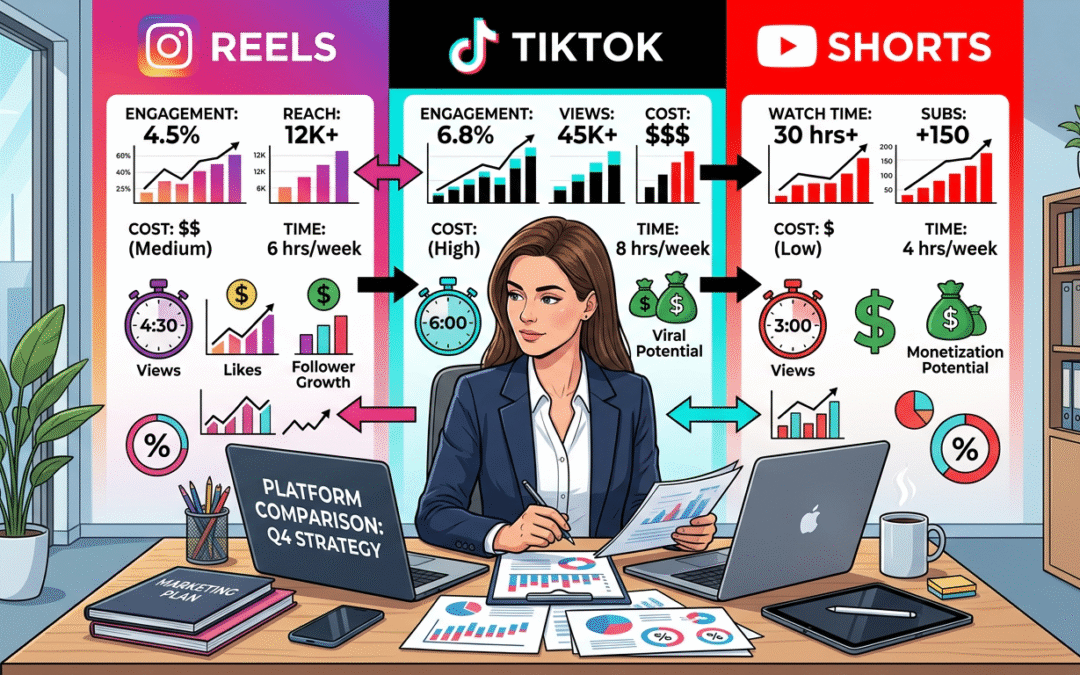
Where Should Local Businesses Focus?
Most local businesses approach short-form video platforms like they’re choosing a restaurant for dinner. They compare features, read reviews, maybe ask a friend, then pick one and hope for the best.
But platform choice isn’t a preference decision—it’s a resource allocation decision with measurable business consequences. And most businesses are making this choice based on incomplete information about what actually drives results in local markets.
The real question isn’t which platform is “best.” It’s which platform gives you the highest probability of customer acquisition given your specific constraints: time, content creation capability, and customer behavior patterns.
The Hidden Cost of Multi-Platform Mediocrity
Here’s the uncomfortable truth: the businesses succeeding with short-form video aren’t spreading themselves across three platforms. They’re dominating one.
A plumbing company in Phoenix posts twice weekly on TikTok and generates 15-20 service calls per month from the platform. Meanwhile, their competitor posts daily across all three platforms and generates 3-4 calls total. The difference? Content depth and algorithmic momentum.
Each platform rewards consistent, native content creation. When you split your effort, you never achieve the posting velocity needed to trigger algorithmic distribution. You end up with three mediocre presences instead of one that actually moves business metrics.
The Local Business Platform Reality Check
TikTok: The Discovery Multiplier
Best for: Service businesses with visual processes, retail with young demographics, restaurants, fitness
TikTok’s algorithm is the only one that will show your content to people who don’t follow you at scale. A roofing company in Dallas posted a “how we install solar panels” video that reached 47,000 people with zero followers. That’s algorithmic leverage you can’t buy.
The Resource Requirements: 4-6 videos per week minimum. The algorithm punishes inconsistency more severely than other platforms. If you can’t maintain that velocity, TikTok becomes a time sink.
What Actually Converts: Process videos (“how we diagnose AC problems”), problem-solving content (“why your toilet keeps running”), and before/after transformations. The HVAC company showing thermal imaging of air leaks gets more leads than the one explaining their company values.
The Local Limitation: TikTok’s local discovery features are improving but still weak. You’ll get reach, but it may not be geographically relevant.
Instagram Reels: The Balanced Play
Best for: Service businesses targeting homeowners, retail, professional services, B2C with established Instagram presence
Instagram Reels sits in the middle of the spectrum—easier to manage than TikTok, better local targeting than both competitors, but with a lower organic reach ceiling.
The Resource Reality: 3-4 Reels per week sustains momentum. You can batch-create more easily than TikTok because the audience expects slightly more polished content.
What Drives Results: Educational content with text overlay performs consistently. “3 signs your foundation is settling” or “How to choose the right mortgage broker” gets saved and shared. The key insight: Instagram users consume content with sound off 60% of the time. Designed for silent viewing.
The Local Advantage: Instagram’s local hashtag discovery and location tagging actually work for local businesses. A Denver landscaping company gets 40% of their Reels views from local hashtags.
YouTube Shorts: The Long-Term Investment
Best for: Service businesses, B2B, anything requiring education or trust-building
YouTube Shorts has the slowest initial growth but the highest long-term value. Your content becomes searchable, drives traffic to longer videos, and builds actual subscribers who remember you when they need your service.
The Resource Calculation: 2-3 Shorts per week is sufficient. Lower frequency requirement but higher content quality bar—YouTube audiences expect problem-solving value.
What Gets Results: “How-to” content and myth-busting videos. “Why your garage door opener failed” or “3 mistakes homeowners make with sprinkler systems” build authority and generate leads months later through search.
The Compounding Effect: A Phoenix pool maintenance company’s YouTube Shorts from 18 months ago still generate 30% of their monthly leads. That’s content ROI you don’t get from other platforms.
The Decision Framework That Actually Matters
Stop asking “which platform is best” and start asking:
- Where is your customer’s intent highest?
- TikTok: Discovery and entertainment
- Instagram: Lifestyle and inspiration
- YouTube: Problem-solving and research
- What’s your content creation constraint?
- High volume capability → TikTok
- Moderate with design focus → Instagram Reels
- Lower volume, higher value → YouTube Shorts
- What’s your customer acquisition timeline?
- Immediate leads needed → Instagram Reels
- Building discovery → TikTok
- Long-term authority → YouTube Shorts
The Single Platform Strategy
Pick one platform and commit to it for 90 days. Track three metrics:
- Reach velocity:How quickly does each video reach 1,000 views?
- Engagement quality:Are people commenting with actual questions about your service?
- Business impact:Phone calls, website traffic, service inquiries
If you’re not seeing momentum after 90 days of consistent posting (not sporadic posting), then evaluate platform fit. But most businesses quit after 30 days, right before algorithmic momentum typically kicks in.
The Content Strategy That Converts
Regardless of platform, the highest-converting content for local businesses follows this pattern:
Problem → Process → Outcome
Show the customer’s problem, demonstrate your process for solving it, reveal the result. A pest control company showing termite damage, their treatment process, and the final inspection gets more leads than any amount of company culture content.
The Critical Insight: Your content strategy should mirror your sales process. If you diagnose problems before proposing solutions in person, do the same in your videos.
Platform Choice as Business Strategy
Your platform choice signals your market positioning:
- TikTok positions you as accessible and current
- Instagram Reels positions you as professional and established
- YouTube Shorts positions you as an expert and educational
This isn’t just about content—it’s about how customers perceive your business before they ever contact you.
The plumbing company that explains “why your water pressure suddenly dropped” on YouTube Shorts gets different customer inquiries than the one posting trending dances on TikTok. Both can work, but they serve different market segments with different expectations.
The Bottom Line
Platform choice is a resource allocation strategy disguised as marketing tactics. The businesses winning with short-form video understand this and make platform decisions based on customer behavior data, not platform popularity.
Stop optimizing for vanity metrics across multiple platforms. Pick the platform where your ideal customers have the highest intent to solve the problems you solve, commit to content velocity that triggers algorithmic distribution, and measure business impact, not video views.
Your platform choice is your customer acquisition strategy. Choose accordingly.