
What’s Working Right Now
While you’re optimizing your website for the third time this quarter, a plumbing company in Beeston just captured three emergency call-outs because they show up in Google’s Local Pack consistently. A café in Hockley filled their weekend bookings through targeted social posts to their email list. And a solicitor in the Lace Market converted two high-value clients who found them through review responses that demonstrated expertise, not generic thank-yous.
This isn’t about working harder. It’s about understanding what moves the needle in Nottingham’s specific competitive environment — and executing on it systematically.
The Nottingham Digital Hierarchy Nobody Talks About
In Nottingham’s local search landscape, three layers determine who gets found first:
Layer 1: Google Business Profile dominance:
The businesses winning emergency plumbing calls, last-minute restaurant bookings, and urgent legal consultations have profiles that signal active, reliable operations. They post weekly updates about seasonal services, respond to every review within 24 hours, and use location-specific content that Google’s algorithms recognize as locally relevant.
Layer 2: Reputation velocity:
Beyond star ratings, Nottingham customers respond to review patterns. A dental practice with 15 reviews from the past month outperforms one with 50 reviews spread over two years. Fresh social proof indicates current competence.
Layer 3: Digital omnipresence:
The most successful local competitors show up consistently across multiple touchpoints. Their Google Posts reinforce their website content. Their email campaigns drive engagement that feeds back into search rankings. Their social media demonstrates work in progress, not just promotional announcements.
What’s Actually Working in Nottingham Right Now
They’re Exploiting Google’s Local Pack Bias
Nottingham’s service radius creates unique competitive advantages. A heating engineer operating from West Bridgford can dominate searches for “boiler repair Nottingham” by optimizing their service area descriptions and posting location-specific content about Nottingham’s Victorian housing stock and common heating issues.
The winners aren’t just listing services — they’re contextualizing expertise within Nottingham’s specific infrastructure challenges, from Meadows flood concerns to Sherwood’s 1970s housing estate heating systems.
They’re Building Email Lists Through Local Intelligence
A family law firm near Nottingham Castle captures emails by offering downloadable guides about “Nottinghamshire Family Court Procedures” — hyperlocal content that demonstrates jurisdiction-specific knowledge. A commercial cleaning company grows their list with “Office Cleaning Compliance for Nottingham City Centre Buildings” resources.
These aren’t generic lead magnets. They’re addressing regulatory, geographic, and infrastructure realities that only affect Nottingham-area businesses and residents.
They’re Creating Content That Ranks for Nottingham-Specific Problems
The businesses capturing organic search traffic understand Nottingham’s unique challenges:
- Accountants writing about Nottingham’s business rates for small retailers
- Roofers addressing clay tile repairs common in areas like Mapperley and Carlton
- Commercial solicitors explaining East Midlands development regulations
This content doesn’t just build authority — it captures search volume that generic competitors can’t touch.
They’re Using Hyperlocal Social Proof
Instead of generic testimonials, winning businesses showcase work in recognizable Nottingham locations. A landscaping company posting before-and-after photos from Wollaton Hall grounds or Colwick Country Park builds instant local credibility. A commercial photographer highlighting work at the Nottingham Contemporary or Motorpoint Arena demonstrates scale and local integration.
They’re Leveraging Nottingham’s Network Effects
The city’s business community concentrates around specific areas — the Creative Quarter, Nottingham Science Park, the Lace Market. Smart competitors position themselves within these ecosystems through strategic partnerships, local event participation, and content that references the business communities they serve.
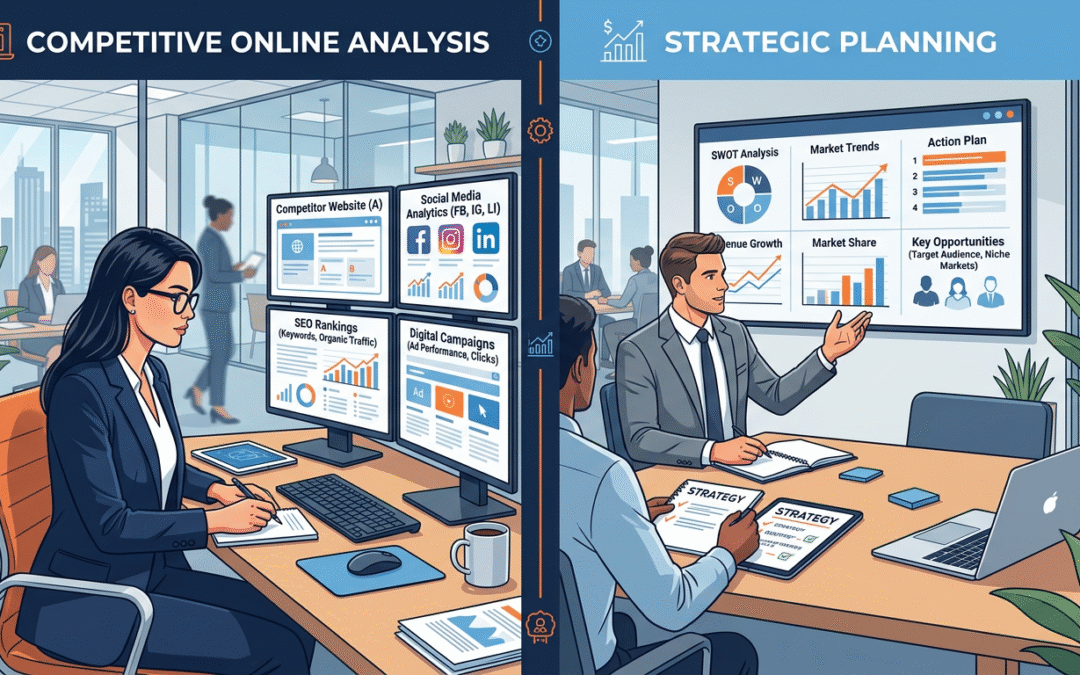
The Competitive Intelligence Framework
Rather than guessing what competitors are doing, successful Nottingham businesses monitor:
Local Pack positions for their key services — Who’s showing up consistently for “emergency electrician Nottingham” or “commercial lawyers East Midlands” and what content patterns they’re using.
Review acquisition strategies — How often competitors request reviews, which platforms they prioritize, and how they respond to negative feedback.
Content themes that rank — Which local competitors appear for valuable search terms and what specific local knowledge they’re demonstrating.
Email engagement indicators — Social media activity that suggests active email marketing (new customer showcases, seasonal promotions, event announcements).
The Implementation Reality
Most Nottingham businesses fail at digital marketing because they copy London or Manchester strategies without adapting to local market dynamics. They optimize for “UK-wide” search terms instead of “Nottingham-specific” problems. They create generic content instead of addressing East Midlands business challenges.
The competitive advantage comes from understanding that Nottingham’s market size allows for dominance through consistent local focus rather than broad national competition.
Start with one hyperlocal advantage: Choose either Google Business Profile optimization for Nottingham-specific searches, content creation around local business challenges, or email list building through location-specific resources.
Execute consistently for 90 days. Track Local Pack positions, review velocity, and inquiry sources.
Your biggest competitors aren’t the national chains with bigger budgets. They’re the local businesses who understand Nottingham’s specific market dynamics and execute basic digital marketing consistently within that context.
The question isn’t whether you’re behind — it’s whether you’re going to start building local digital authority before they establish an unassailable position.